
Wood & Stone Floor Specialists · St Johns · Woking · GU21
Floor Restoration in St Johns, Woking
Wood floor sanding and refinishing, parquet restoration and tile cleaning in St Johns and the surrounding GU21 area. Free site visit, usually available within a few days.
or call 07796 003 638
St Johns occupies an interesting position. It’s neither the commercial bustle of Woking town centre nor the more rural feel of Horsell or Knaphill, but something in between. The housing reflects that: Victorian terraces along the older routes, Edwardian and inter-war properties in the residential streets, and a scattering of post-war and more recent housing beyond. The floors across these properties are just as varied.
We restore wood floors, tile floors and natural stone in St Johns.
Our most common enquiries from this part of GU21 are for Victorian pine boards that have spent decades under carpet, and kitchen tile floors where the tiles are fine but the grout has given up. We also occasionally work on parquet in the larger inter-war properties along the St Johns Road corridor. Whatever the floor, the process is the same: we come and look, tell you what’s there and what it needs, and give you a written price before we start.
- Family-run, fully insured
- Free no-obligation site visits
- Fixed-price quotes, no hidden fees
- Usually respond within a few hours
Floor restoration services in St Johns
Wood floor sanding and refinishing
St Johns’ Victorian and Edwardian terraces, particularly in the roads between the station and the St Johns Road, have original pine and oak boards that are almost universally worth restoring. Pine in the earlier Victorian properties: wide, moderately soft, with the slight unevenness that gives old floors their character. Oak in the Edwardian stock: denser, harder-wearing, more uniform, takes a finish with exceptional clarity.
Both sand back well. We remove the old finish, address any loose boards or gaps, work the edges carefully, and apply the finish you choose. The difference between a lacquer and an oil finish matters in St Johns because the houses vary. The lighter, larger Edwardian rooms suit oil better, while the darker, busier hallways and kitchens are often better served by a lacquer that’s easy to keep clean.
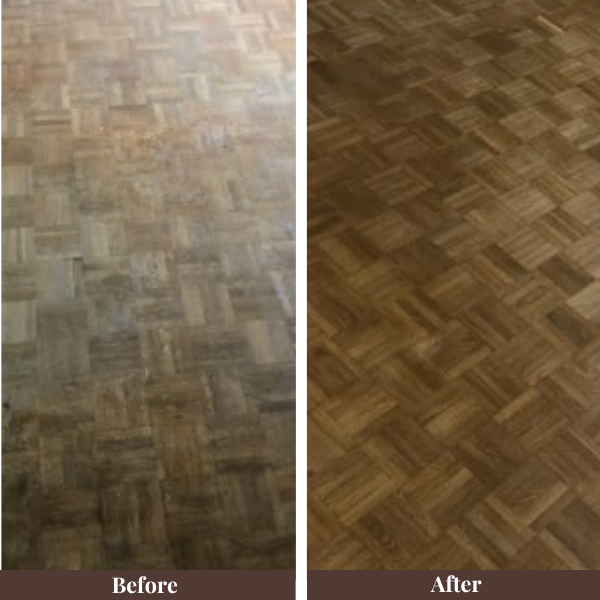
For the inter-war properties along the main St Johns Road corridor, parquet is sometimes found in the hallways: usually herringbone, sometimes in surprisingly good condition under fitted carpet.
Tile and grout deep cleaning
Kitchen floors throughout St Johns’ post-war and later housing stock are predominantly tiled: ceramic in the older properties, porcelain in more recent refits. The tiles themselves usually outlast several changes of grout condition, but the grout gradually discolours with embedded grease and cleaning product residue until the floor looks permanently unclean.
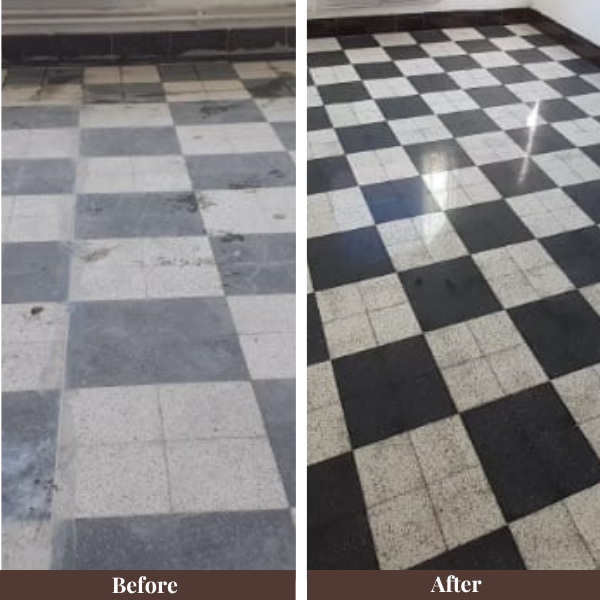
We use a rotary extraction process to lift the ingrained grime from the grout pores properly, not just from the surface, then seal both the tile and grout with an impregnating treatment. The finish is a floor that looks genuinely clean and stays that way considerably longer than before.
Natural stone restoration
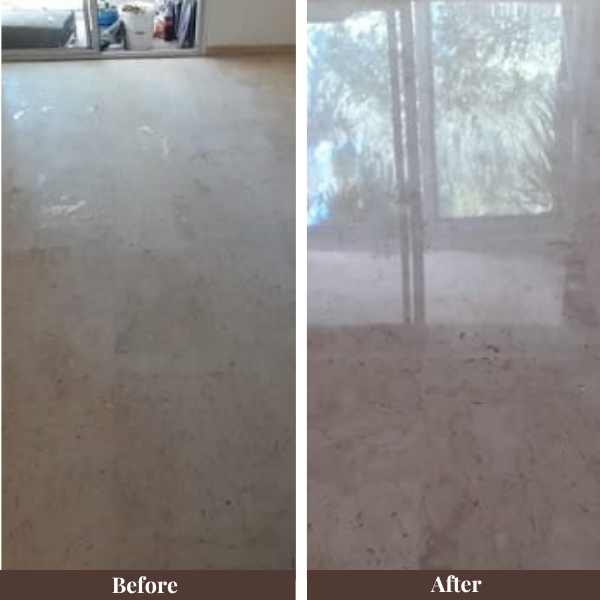
Stone floors in St Johns appear in renovated properties: limestone and travertine in kitchen-diners and bathrooms, the occasional marble in an entrance area. These respond well to professional cleaning and resealing, and where the stone has been etched or dulled by foot traffic, a light hone restores the surface before the seal goes on.
We also carry out village hall floor restoration for community spaces around Woking, coordinated around regular bookings.
"Firstly, thank you Philippe and team for translating my requirements into a stunning end result. For those looking for an outfit that can transform your hard flooring these are the guys! Great communication, hard work, punctual, going the extra mile, polite, and perfectionist's! All the qualities I admire, and competitive with their pricing."
Seb Gee, Google Reviews
How floor restoration works in St Johns
Start with a call, an email or the quote form. A photo is useful but not essential, and we’ll come back to you quickly. We then visit your St Johns property, look at the floor, and discuss what you’d like to achieve. For older properties, we’ll check for original flooring even under carpet if you haven’t already. If you’d like to know what to expect before the visit, our guide to preparing your home for a floor sanding job covers it in plain terms.
A fixed, written price follows, covering everything agreed at the visit. There are no additions unless the scope changes, and we flag any changes before proceeding.
Then comes the restoration itself, done carefully: wood sanding with dust extraction, and stone and tile work without airborne dust.
We finish with written care notes before we leave, with different advice for lacquered boards, oiled boards, sealed stone and sealed tile.
What a St Johns floor restoration typically involves
St Johns enquiries tend to fall into a few common patterns, each with different cost drivers.
Victorian boards having their first restoration are likely to need gap filling, potentially some board re-fixing, and a full sand-and-finish, and represent good value relative to the result because the boards are usually in better condition than expected. Parquet in an inter-war hallway involves block repairs, careful sanding and a finish to your choice, slightly more per square metre than straight boards but with an exceptional result. A kitchen tile and grout clean is the most straightforward job, where area is the main variable and the level of soiling affects time. An engineered wood refresh depends on the wear layer, so we quote after assessment.
Every quote is written, fixed and given before we start.
See the difference that professional floor restoration can make:
Book a free site visit in St Johns
We cover St Johns and the surrounding GU21 area from our Farnham base. Most enquiries get a response the same day, and we can usually arrange a site visit within a few days.
Questions we get from St Johns homeowners
My Victorian terrace in St Johns has original boards in the sitting room but tiles in the hall. Can you restore both on the same visit?
Yes. It’s actually one of the most common situations we see in St Johns: solid boards in the main living rooms, tiled hallway laid on a concrete sub-floor. We can assess both at the same site visit, quote for both, and where the scheduling works, carry out both jobs at the same time. The tile cleaning is done first; the wood sanding after, so the hall is usable while the boards dry.
The boards in our St Johns terrace were painted by a previous owner. Can they be restored to natural wood?
Yes. Painted boards need a stripping pass before the wood can be properly finished. It’s an additional step that adds time and is included in the quote. The underlying board is almost always in better condition than the paint suggests. Once the paint is removed and the surface sanded back to clean wood, the boards respond to finishing the same way as any other well-kept Victorian pine.
We want to put our St Johns property on the market. Is restoring the floor a good investment before sale?
Almost always yes. A properly restored floor removes one of the most common buyer objections to period properties, worn or uncertain flooring, and typically costs a fraction of what buyers deduct in negotiation. We can usually work to a timeline that fits a sale programme. The floor finishes are fully cured within a week, well within most sale timelines.
My Edwardian semi in St Johns has parquet in the hallway but it’s very dark. Was it stained or is that the age of the wood?
It’s often a combination. Original oak parquet darkens naturally over decades, and many floors were also stained or varnished at some point in their life. After sanding, the natural colour of the wood underneath is revealed, which is typically a warm, mid-toned oak. If you want to change the colour from there, a stain can be applied at the finishing stage. We discuss this at the site visit.
How long does a typical St Johns floor restoration take from first contact to completion?
From first contact to completion, the typical sequence is: same-day or next-day response to your enquiry; site visit within a few days; quote within 24 hours of the visit; work scheduled to suit your calendar. The work itself, for a typical Victorian terrace floor in St Johns, is one to two days. So from enquiry to finished floor, most projects complete within two to three weeks.
Transparent, Competitive Pricing

07796 003 638
