
Commercial Wood Floor Restoration
A worn floor is a first impression you can fix.
A tired wooden floor can make your venue feel uncared-for, even when everything else is spotless.
We restore commercial floors across the South of England with 98% dust-free sanding and a finish chosen for how your space is actually used, with a clear plan for downtime so you know what reopening looks like before we start.
Commercial floor restoration, for us, is taking a wooden floor right back to a clean, consistent surface, then rebuilding its protection with a finish that suits your environment and the way people move through the space.
In most venues that means stripping tired coatings with professional belt and edge sanders, closing up gaps and worn joints where needed, then applying the right finish, whether that’s water-based sealers and lacquers for durability, oils for a more natural look, or stains when you need a specific tone.
The aim is simple: a floor that looks sharp, stays cleaner between services, and doesn’t need constant attention. Done properly, a commercial wood floor restoration is not just cosmetic. It’s a practical reset that reduces day-to-day frustration with scuff-heavy traffic lanes, patchy sheen, and finishes that keep failing in the same spots, while keeping disruption to a minimum.
Whatever type of venue you operate, we can restore your floor to a like new condition - with minimum disruption to your business.
- Sports Halls
- Hotels
- Village Halls
- Restuarants & Pubs
"Superb job. Seamless from start to finish. The quality of the finish is outstanding - our floors have never looked so good."
Richard McKenna
OUR PROCESS
Step 1: Commercial floor sanding
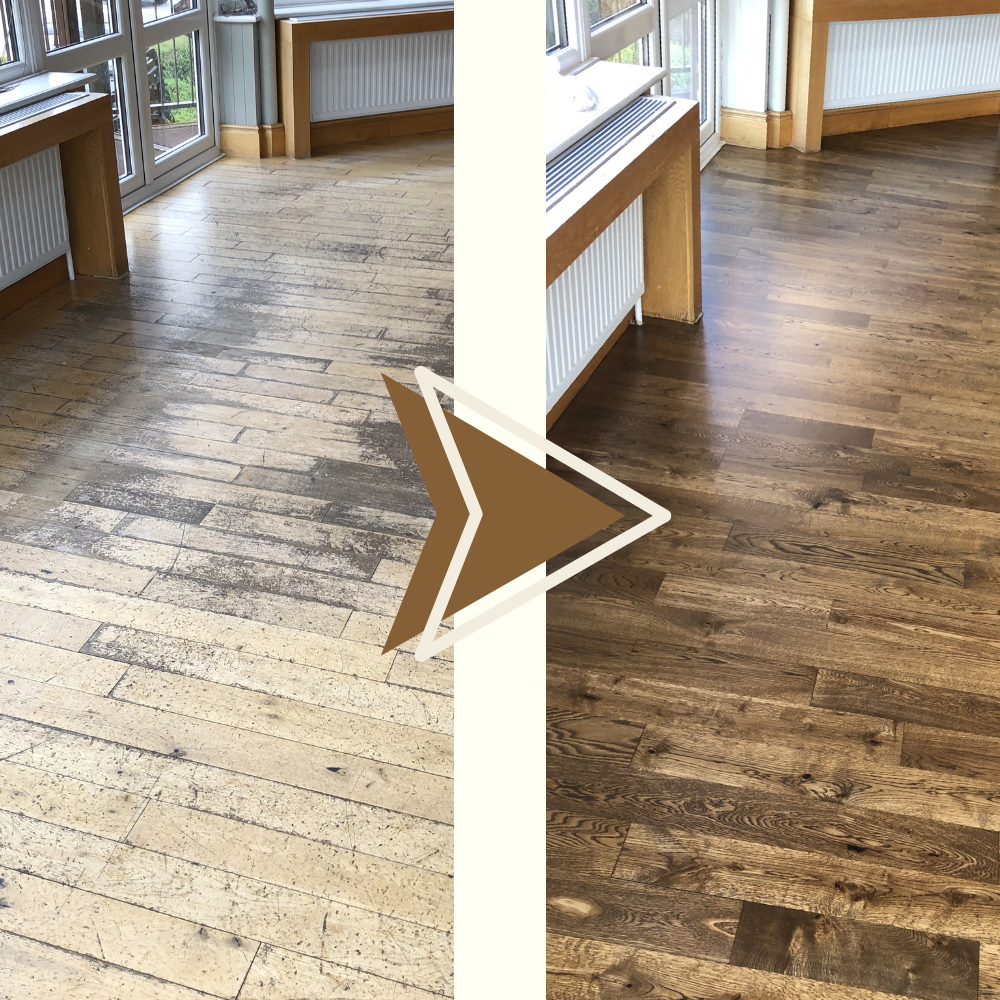
Sanding is the step that genuinely resets the surface, and it is where the quality of the outcome is largely decided. We strip old coatings by running the floor through multiple passes with progressively finer grit papers. Where the floor has worn unevenly, this process also helps level the surface and remove years of use.
Edge sanding follows right up to the skirting boards. We use specialist detail tools for corners, tight edges, and difficult access areas that larger machines cannot reach. This ensures every part of the floor is properly prepared before the new finish is applied, leaving no untreated patches.
All our machines use powerful vacuum extraction and are up to 98% dust-free. In a live commercial building, that matters. Dust migrating into adjoining offices, stock rooms, or guest-facing spaces can quickly become a problem on working sites, which is why our professional equipment is specifically chosen to keep dust under control.
Many commercial spaces we work in, such as restaurants, hotels, offices, or retail venues, have not had their floors properly restored in years. In those cases, a full sanding process is often the only way to completely revive the surface and bring the space back to life. Rather than applying a temporary cosmetic fix, sanding allows the floor to be reset and restored so the entire venue feels refreshed and renewed.
We also understand that downtime for commercial spaces can be costly. For that reason, we work closely with clients to fit around opening hours and minimise disruption wherever possible. Our goal is always to complete the work efficiently so your business can reopen quickly and safely.
In some environments, particularly busy restaurants, bars, hotels, or high-traffic venues, night shifts are often the best solution. Working overnight allows us to restore the floor while the premises are closed, helping businesses maintain operations and reduce interruption for staff and customers.
The number of sanding passes depends on the floor’s condition and the finish currently in place. A floor that has not been touched in ten years requires a very different approach from one that has simply lost its sheen. We assess this during the site visit and explain exactly what the job involves before any work begins, ensuring complete transparency about the process and the results you can expect.
OUR PROCESS
Step 2: Gap filling
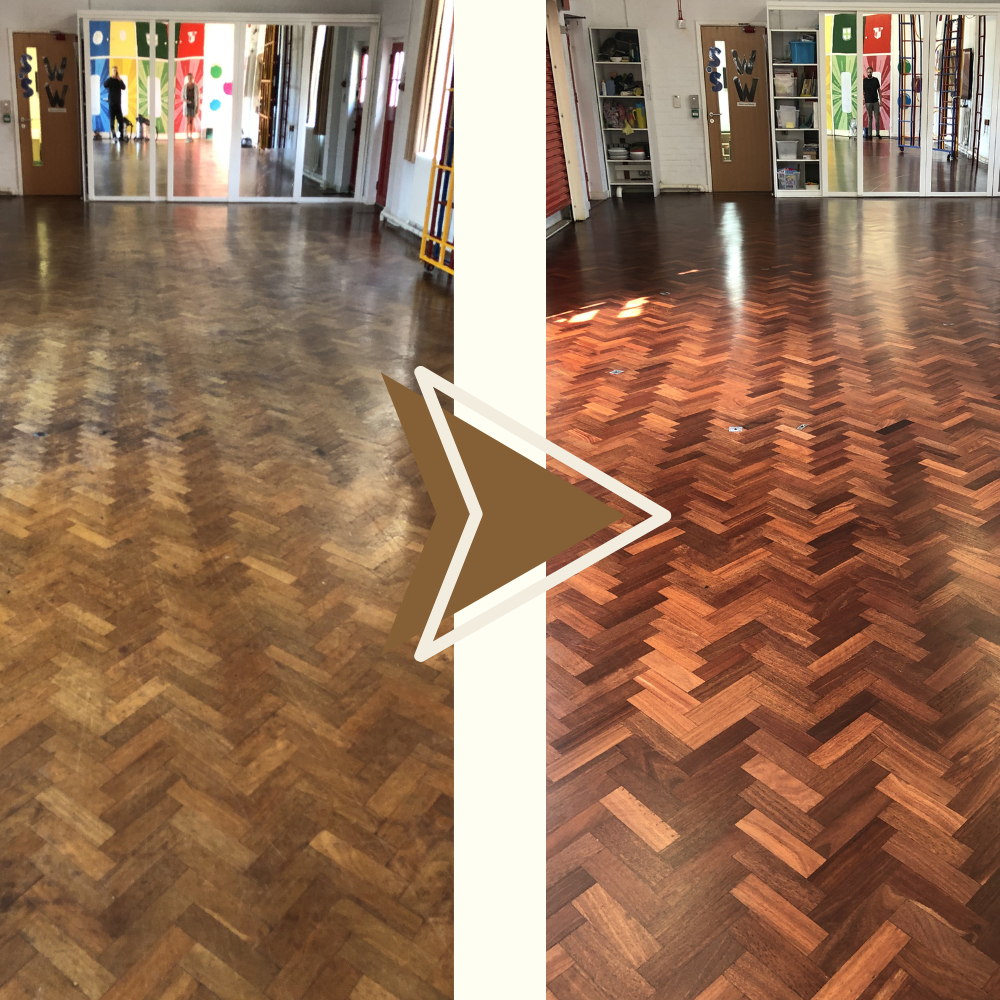
Most parquet floors, particularly patterns such as herringbone or block parquet, can develop small gaps between the blocks over time. This is especially common in older properties or spaces that experience changes in temperature and humidity throughout the year. When gaps are left open, they can trap dirt, collect moisture, and make the surface harder to clean properly. They can also affect the overall appearance of the floor, even after a full sanding and refinishing.
Where gaps are present in parquet flooring, we can fill them as part of the preparation stage, before any finish is applied. To do this, we collect the clean sawdust produced while sanding the floor and mix it with a clear resin to create a filler that closely matches the natural colour of the wood. This mixture is then worked into the gaps so it blends naturally with the floor rather than standing out. Gap filling is particularly suited to parquet floors such as herringbone, where the smaller blocks tend to remain more stable. We assess whether this is appropriate during the site visit and include it in the quotation so everything is clear before work begins.
In some cases, gap filling can also be carried out on traditional floorboards, although this depends on the width of the boards and the amount of movement in the floor. Solid boards often expand and contract more with seasonal changes, so filling is not always recommended. This can be discussed and assessed during the site visit to determine the best approach for the floor.
OUR PROCESS
Step 3: Commercial wood floor refinishing
Refinishing is the stage where the floor becomes practical and ready for use again. Once the final sanding has been completed, the detailed edge work finished, and the surface has been thoroughly cleaned, the floor is ready for its finishing system.
In commercial environments, durability and ease of maintenance are essential. For this reason, we typically apply a professional finishing system consisting of one coat of primer followed by three coats of two-component (2K) lacquer. This type of lacquer is designed for heavy-traffic spaces and provides a highly durable surface that is significantly more scratch-resistant than standard single-component water-based lacquers. It creates a strong protective layer while still maintaining the natural appearance of the wood.
If the venue requires a particular colour or aesthetic, the floor can also be stained before the finishing coats are applied. Staining allows the tone of the wood to be adjusted or enriched to match the design of the space while still benefiting from the protection of the lacquer system.
In some environments, we may also recommend alternative finishes such as professional 2K oils. Oils penetrate into the wood rather than sitting on the surface, giving a more natural look and feel, and can be suitable for certain commercial spaces depending on the desired appearance and maintenance routine.
When comparing commercial wood floor sanding and refinishing contractors, one of the most useful questions to ask is what finishing system they recommend and why it is appropriate for that particular space. We explain our recommendations during the site visit so you understand the reasoning behind the finish before any work begins.
Not sure if you need a full sand or a reseal?
That’s the decision that affects cost, downtime, and how long the finish lasts. If you send a few photos, or book a quick site visit, we can give you a straight answer and the right next step.
Sports Hall Floor Restoration
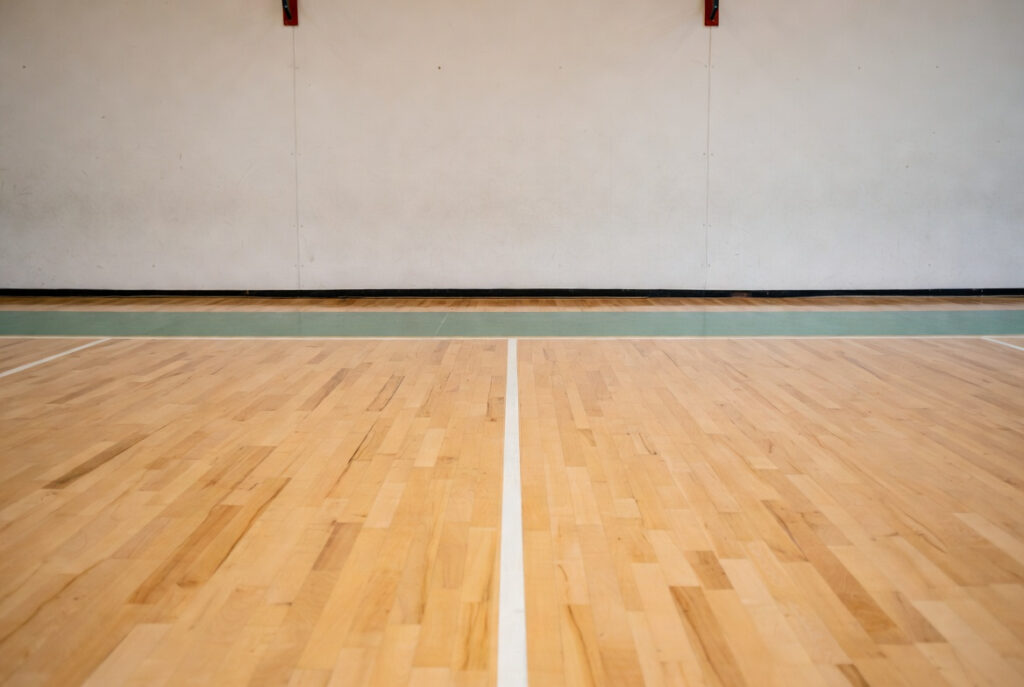
Sports floors wear unevenly. High-use zones lose their grip and finish. Line markings fade. And once the coating starts failing, it spreads quickly.
We restore sports hall floors with durability and safety in mind. That means sanding back to clean timber, correcting uneven wear, and applying a finish that can cope with repeated cleaning and constant use without becoming slippery underfoot.
If you’re responsible for maintaining performance standards and presentation, we’ll give you a floor that looks consistent across the whole court and holds up properly over time.
Village Hall Floor Restoration
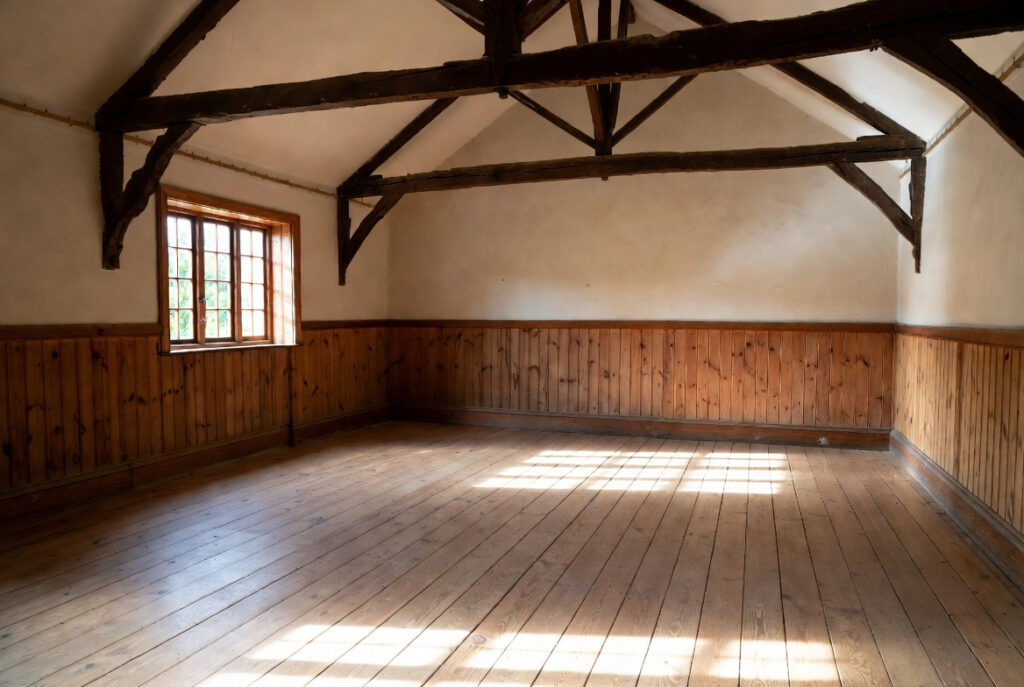
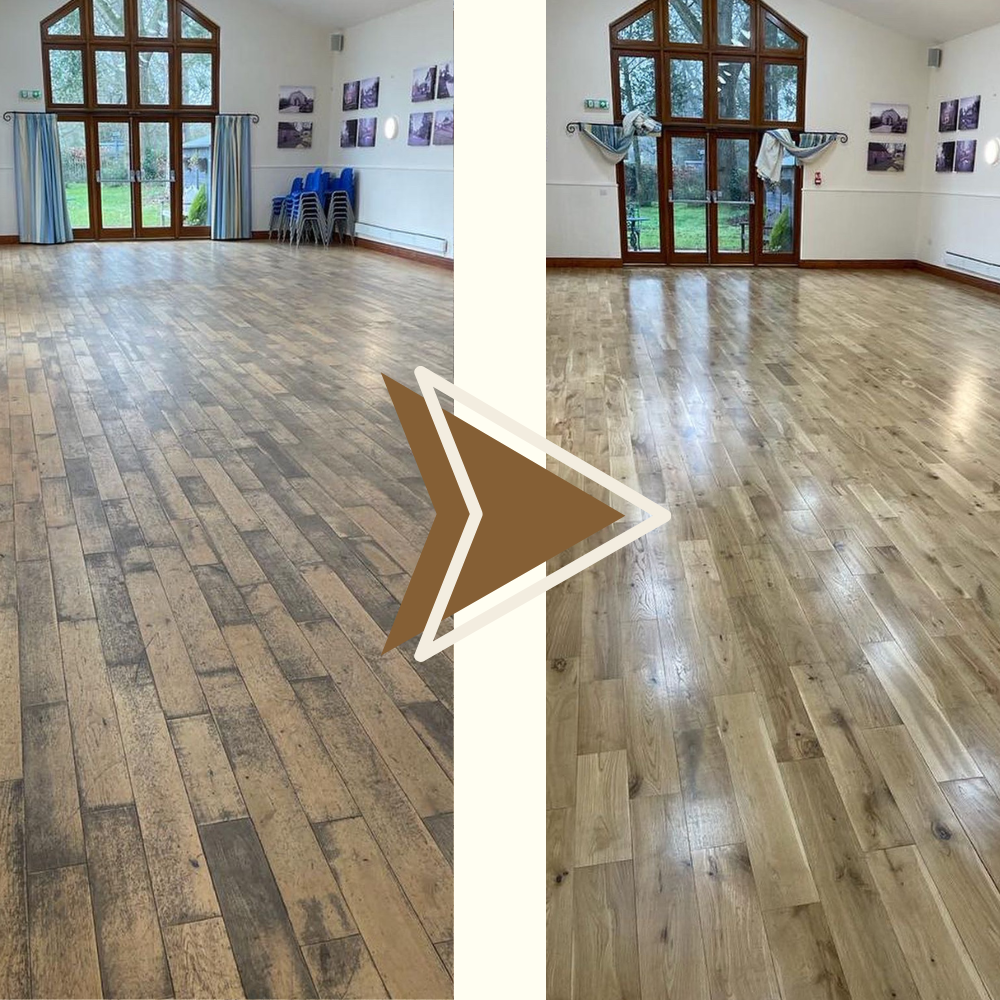
Village halls often have floors with real character. The aim isn’t to strip that away. It’s to preserve what makes the space feel right while making the surface easier to maintain and more resilient to modern use.
We sand back worn coatings, repair where needed, and apply a finish that protects the timber without masking it. The right preparation and system can extend the life of the floor significantly while reducing the ongoing maintenance burden for committees and caretakers.
If your hall floor is starting to look tired but still has life in it, restoration is often the practical answer.
Restaurant Floor Restoration

Hospitality floors take punishment. Spills, scraping chairs, heavy foot traffic, constant cleaning. Weak finishes show their age fast, especially in service lanes and around tables.
We restore pub and restaurant floors with real-world conditions in mind. That means sanding back properly, dealing with high-wear areas, and applying a hard-wearing finish that looks sharp but is built for impact and everyday use.
If you want a floor that supports your brand rather than quietly undermining it, restoration done properly makes the difference.
Hotel Floor Restoration
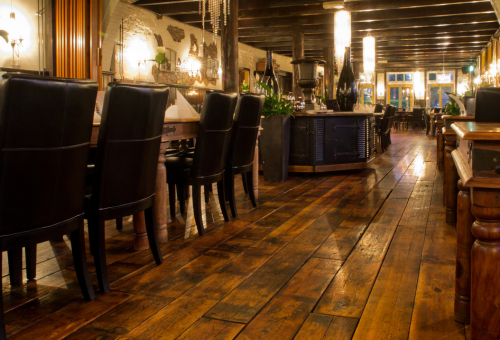
In a hotel, the floor is part of the first impression. Guests notice scuffed traffic lanes, patchy sheen in corridors, and tired finishes in reception areas even if they don’t consciously say it.
We restore hotel floors to a clean, even finish that supports the overall feel of the building. That means careful preparation, controlled sanding, and a durable system that stands up to luggage wheels, constant footfall, and regular cleaning without quickly losing its edge.
The result is a floor that looks sharp in daylight and under evening lighting, and keeps looking that way.
Church Hall Floor Restoration
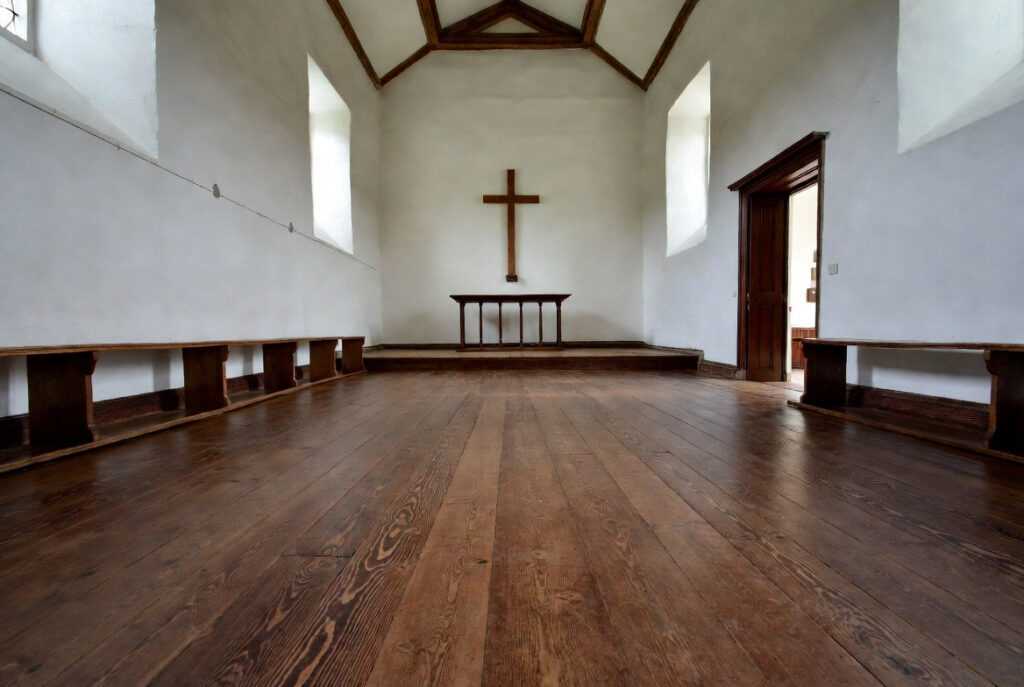
Church halls tend to host a wide mix of activities. Community groups, children’s events, meetings, and private hires can all place steady pressure on the flooring throughout the week.
The goal of restoration is not to remove the character of the hall, but to bring the surface back to a clean, consistent condition. We sand away worn finishes, deal with local damage where needed, and apply a durable coating designed to cope with busy shared spaces.
If your church hall floor is beginning to look dull or uneven, restoration can often return it to a well-kept, welcoming condition without the need for replacement.
School Hall Floor Restoration
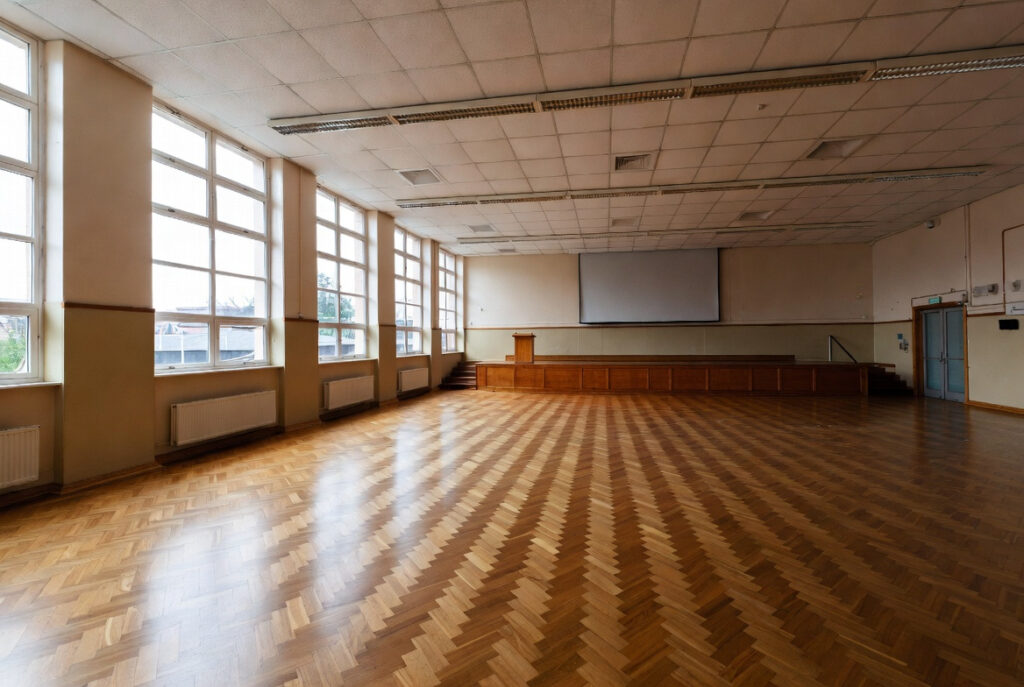
School halls experience some of the toughest conditions of any wooden floor. Daily assemblies, sports activities, chairs, tables, and constant foot traffic gradually wear down the protective finish.
Our restoration process removes the damaged surface layers and rebuilds the protection with a commercial-grade finish suited to high-traffic environments. The result is a floor that is easier to maintain and better suited to the demands of a busy school.
When planned around holidays or quieter periods, school hall restoration can often be completed with minimal disruption to staff and students.
Frequently Asked Questions About Commercial Floor Restoration
What is commercial floor restoration?
Commercial floor restoration is the process of sanding a worn wooden floor back to clean timber and refinishing it with a protective system suited to the demands of the venue. In most commercial settings, this involves professional belt and edge sanding to remove old coatings, preparing the surface properly, and applying water-based sealers, lacquers, oils, or stains that can cope with real foot traffic. The aim is to restore both appearance and durability, not just improve the look temporarily.
How much downtime is required for commercial floor restoration?
It depends on the size of the area, how worn the floor is, and which finish we’re using. Some floors need a full sand and multiple coats, others can be brought back with a lighter approach. Either way, we’ll tell you upfront what the realistic downtime looks like and when you can expect to reopen the space.
If you have fixed bookings, busy trading periods, or limited closure time, we can usually plan around them or work in phases to keep disruption down. We often use low-odour, water-based systems where appropriate, which helps in live venues, but we won’t rush curing times just to reopen early and risk the finish failing sooner than it should.
Do you provide commercial and domestic floor restoration?
Yes. We restore wood, stone, and marble floors for both commercial and domestic customers. Our commercial work includes sports halls, hotels, pubs, restaurants, and community spaces, while domestic projects cover private homes across Surrey, Hampshire, Berkshire, and South West London.
How dust-free is commercial floor sanding?
Our sanding process is approximately 98% dust-free. We use professional sanding equipment with integrated vacuum extraction designed for live commercial environments. This significantly reduces airborne dust, which is particularly important in hotels, offices, hospitality venues, and any building where adjacent areas remain in use during the project.
Can gaps in wooden floors be filled during commercial wood floor restoration?
Yes. Gap filling is carried out after sanding and before refinishing where appropriate. We colour-match the filler so it integrates naturally with the timber. Not every gap should be filled, as wood expands and contracts seasonally, so we assess the floor during the site visit and recommend filling only where it improves durability and cleanability without restricting natural movement.
What finishes are best for commercial wood floors?
The best finish for a commercial wood floor depends on foot traffic levels, cleaning routines, and the look required. We typically use water-based lacquers for durability and easy maintenance, oils for a more natural appearance, and stains where colour adjustment is needed. During the site visit, we recommend a specific system based on how the space is used, rather than applying a generic solution.
Do I need a full sand or just a reseal?
Whether you need a full commercial floor sanding or a reseal depends on the condition of the existing finish. If the coating has worn through to bare timber, shows deep scratches, or has failed in high-traffic lanes, a full sand is usually required. If the base layer is intact but dull or lightly marked, a professional reseal may be sufficient. We assess this during a free site visit and advise honestly on the most appropriate route.
Do you offer free site visits and written quotations?
Yes. We provide free, no-obligation site visits seven days a week. After inspecting the floor, you receive a detailed written quotation outlining the recommended work, the finishing system, and the expected timescale. This ensures you understand exactly what is involved before committing.
How quickly do you respond to enquiries?
We usually respond within a few hours during working days. If your project is time-sensitive or you have restricted access windows, calling directly is the fastest way to discuss availability.
Which areas do you cover for commercial floor restoration?
We cover venues across the South of England for commercial floor restoration and sanding. If you’re unsure whether you fall within our service areas, get in touch with your postcode and a few details about the space. We’ll confirm availability quickly and let you know the most practical next step.
Transparent, Competitive Pricing

07796 003 638
