
Terrazzo Floor Restoration Specialists
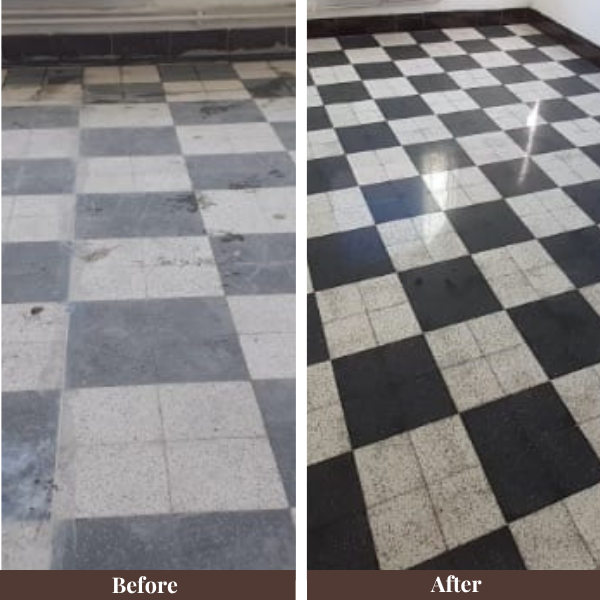
Terrazzo With Every Chip Catching the Light.
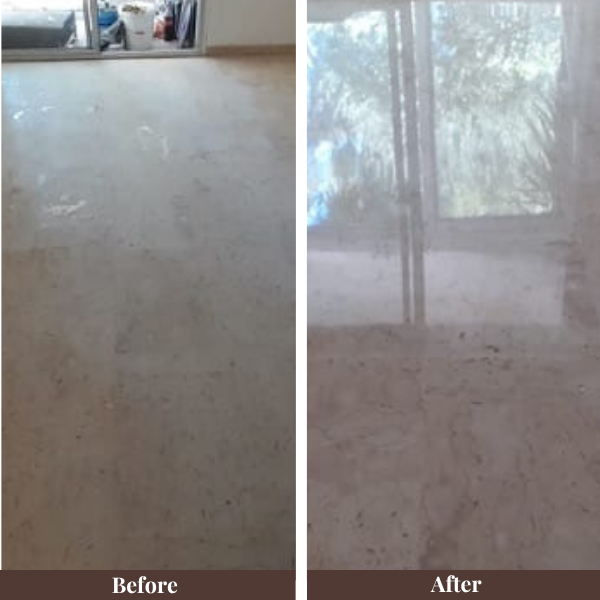
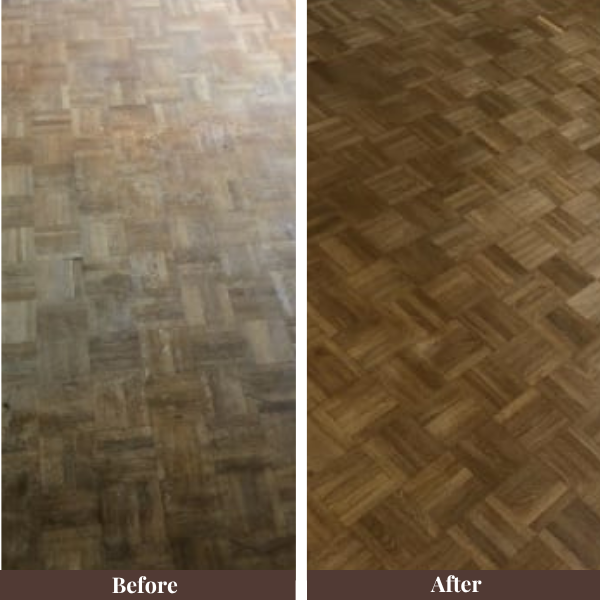
Specialist diamond grinding and progressive polishing to bring out the colour, depth and reflectivity of every chip.
Cement-based and modern resin terrazzo, restored properly.
Free site visit, fixed-price quote.
Terrazzo is one of the most distinctive and enduring floor surfaces ever made — chips of marble, quartz, granite or glass set into a binder, ground flat and polished until each piece of aggregate gleams. From Art Deco entrance halls and mid-century commercial floors through to contemporary architectural installations, properly restored terrazzo has a depth and richness that few other surfaces can match.
We restore terrazzo floors across Surrey, Hampshire, Berkshire and South West London — both traditional cement-based terrazzo and modern resin-bound systems. The process is closely related to marble restoration (diamond grinding through to polishing) but the binder behaves differently, and the chips need careful handling so the colour reads correctly through the polishing stages.
- Family-run, fully insured
- Free no-obligation site visits
- Fixed-price quotes, no hidden fees
- Usually respond within a few hours
We work on Carrara, Calacatta, Crema Marfil, Nero Marquina, Statuario and the other marble varieties commonly used in UK properties.
Each behaves slightly differently — Carrara is forgiving and bright, Calacatta has dramatic veining that needs a finer finish to read properly, Nero Marquina is dark and shows imperfections more readily so demands more care during honing.
We'll match the process to the stone, not the other way round.
- Period entrance halls & lobbies
- Mid-century homes & renovations
- Hotels, restaurants & receptions
- Schools & institutional floors
- Bathrooms & wet rooms
- Modern resin-terrazzo installations
"Firstly, thank you Philippe and team for translating my requirements into a stunning end result. For those looking for an outfit that can transform your hard flooring these are the guys! Great communication, hard work, punctual, going the extra mile, polite, and perfectionist's! All the qualities I admire, and competitive with their pricing."
Seb Gee, Google Reviews
Cement and resin terrazzo
Traditional terrazzo uses a Portland cement binder; modern systems use polymer resin (often called epoxy terrazzo). The polishing process is similar but the chemistry differs — resin-bound terrazzo handles water differently, accepts different sealers, and in some cases needs different polishing compounds. We work on both and adjust the process to the binder.
Bring up the chips, not just the binder
The visual character of terrazzo is in the marble, granite or glass chips, not the cement or resin between them. The polishing sequence is calibrated to bring the chips to full reflectivity while keeping the binder smooth and consistent. Done properly, the floor looks the way the original installer intended — and often better than it has in decades.
Strip old sealers and waxes first
Mid-century terrazzo in particular has often been waxed or coated with topical finishes over the decades. We strip these off mechanically before the polishing sequence, so the new finish goes onto clean, original material — not a stack of old products. This is the difference between a floor that looks right for a few months and one that lasts for years.
Crack repair and chip replacement
Terrazzo can develop hairline cracks or lose individual chips. Cracks are filled with colour-matched polymer or cement (depending on the original binder).
Right sealer for the binder
Cement terrazzo benefits from impregnating sealers that protect against water and oils penetrating the porous binder. Resin terrazzo is naturally less porous and may need a different product or none at all. We test, then recommend — you don’t pay for a sealer the floor doesn’t need.
Local, family-run, fully insured
Farnham-based family business, fully insured, reviewed on Google. Free site visit, written fixed-price quote, no surprise add-ons. We’ve worked on terrazzo from period townhouses through to commercial reception areas.
See The Difference:
How We Restore Terrazzo Floors
Terrazzo restoration follows a similar sequence to marble — assessment, grinding, polishing, sealing — but the binder behaves differently, so identifying the original system is the first thing we do.
Site visit, binder identification, fixed-price quote
We identify whether the terrazzo is cement-bound or resin-bound (this affects the entire approach), assess the chip type and density, look for cracks or missing chips, and check for old wax or topical sealers. You get a written, fixed-price quote covering exactly the work needed.
Strip and grind
We remove any old wax, polish or topical sealer mechanically. Where the floor has lippage, deep scratches or worn-through patches, we begin with coarse diamond grinding to flatten the surface. This stage exposes the chips fresh and creates a clean foundation for the polishing sequence.
Progressive diamond polishing
Diamond pads at progressively finer grits — typically through six to seven stages — bring up the reflectivity of the marble, granite, quartz or glass chips while keeping the binder smooth. Each stage removes the scratch pattern from the one before. The final stages may use polishing powders or crystallisers to achieve a full mirror finish.
Repair, seal where appropriate, aftercare
Cracks and missing chips are repaired with colour-matched fillers and re-polished flush. For cement terrazzo, we apply an impregnating sealer to protect the porous binder; for resin terrazzo, sealing is often unnecessary but we’ll advise based on the specific system. You receive a written aftercare guide tailored to the binder type.
Get a fixed price for your marble floor restoration
Free site visit, 7 days a week. We usually respond within a few hours.
What affects the price?
Terrazzo restoration is quoted as a fixed price after a free site visit. Cost varies more than for most stones because the floor’s age, binder type, condition, and any repair work all affect the work involved. Factors that go into the quote:
Binder type and age
Old cement terrazzo with decades of wax and dirt often needs more strip work than modern resin-bound systems. Both can be brought back beautifully — the work involved differs.
Number of polishing stages
Light scratches might be removed in three or four polishing passes; heavily worn or damaged terrazzo can take six or seven. Each stage takes time and can’t be skipped without compromising the finish.
Repairs
Cracks and missing chips can almost always be repaired with colour-matched fillers — but the number of repairs affects the quote.
Total area and access
Open commercial floors are quicker per square metre than tight residential layouts with fixed furniture, awkward stair sections, or narrow hallways.
Sealer requirement
Cement terrazzo benefits from sealing; resin terrazzo often doesn’t need it. We test and recommend — you don’t pay for a sealer the floor doesn’t need. The site visit is free and there’s no obligation.
Frequently Asked Questions About Terrazzo Floor Restoration
Can old period terrazzo really be brought back?
Almost always, yes. Period cement terrazzo from the 1920s through to mid-century is hugely durable — what’s failed is usually the surface polish, layers of old wax, and the protective seal. The original aggregate underneath is generally in fine condition. Stripping the old finish and re-polishing through the proper diamond sequence typically transforms the floor.
What’s the difference between cement and resin terrazzo?
Cement terrazzo (the traditional type) uses Portland cement as the binder between the chips, and is porous enough to need sealing. Resin terrazzo (also called epoxy terrazzo) uses polymer resin, which is much less porous and gives a brighter, more uniform finish — common in modern architecture. Both polish similarly but accept sealers differently. We identify which you have and adjust accordingly.
How much does terrazzo restoration cost?
Fixed price after a free site visit. The price spread on terrazzo is wider than for most stones because age, binder type, and repair work vary so much. We assess the floor honestly and tell you whether it needs full grind-and-polish, refinement-and-seal, or somewhere in between. You get a written quote — that’s the price you pay.
How long does terrazzo restoration take?
Most domestic terrazzo floors are completed in two to four working days. A modest entrance hall can be a day or two; a larger or heavily damaged floor takes longer because the polishing sequence has more stages and the repair work needs curing time. We’ll give you a realistic timescale at quote stage so you can plan around it.
Will the work be messy or disruptive?
We work as cleanly as possible. Our machines use high-extraction vacuum systems to keep airborne dust to a minimum during dry stages, and wet-process stages are contained and cleaned up on site. We protect adjoining areas before we start, work to your schedule where we can, and tidy up before we leave. Most homes stay liveable around the work.
Which areas do you cover?
Surrey, Hampshire, Berkshire and South West London — including Guildford, Woking, Weybridge, Esher, Cobham, Farnham, Farnborough, Fleet, Basingstoke, Camberley, Ascot, Sunningdale, Windsor, Richmond, Kew, Barnes and Twickenham. For larger commercial sites we’ll travel further where the job is the right fit. Send us your postcode when you enquire and we’ll confirm.
How soon can you start?
We usually respond to new enquiries within a few hours and can often arrange a site visit within a couple of days, including weekends. Booking the work itself depends on diary — typically a week or two from quote acceptance, though we’ll always tell you honestly if it’ll be longer. Urgent commercial jobs we’ll prioritise where we can.

